How to Choose Fabric for a Toile
Share
A toile is a test version of a garment, made before you cut into your final fabric. It lets you check fit, proportions and construction, and make changes while they’re still straightforward.
Calico is a familiar choice, but it isn’t right for every garment. The most useful toile fabric behaves enough like your final cloth to give you a reliable picture of how the finished piece will fit and hang.
What are you testing?
Before choosing cloth, decide what you need the toile to tell you.
For an initial fitting, you might be checking shoulder position, waist placement or the length of a bodice. A stable cotton can make these details easy to mark and adjust.
If you’re testing a flowing skirt, a bias-cut dress or a stretch garment, the fabric’s behaviour becomes much more important. A stiff woven cotton won’t show how a fluid or stretchy cloth will fall.
You may need more than one stage: an initial toile to establish the shape, followed by a closer fabric match to check movement, drape and construction.
Match more than the weight
Weight and thickness
Choose cloth with a broadly similar weight and thickness to your final fabric. A very light toile may not show how bulky seams will sit in a heavier garment.
Gsm—grams per square metre—is useful for comparison, but two fabrics with the same weight can feel quite different.
Drape
Drape describes how cloth hangs and folds. Does your final fabric fall softly, or hold a defined shape?
Compare fabrics by letting a larger piece hang over your hand or a dress form. A small sample helps you assess texture and body, but won’t show the full behaviour of a skirt or dress.
Structure
For a structured garment, choose toile cloth with enough body to represent the intended silhouette. For softer garments, avoid cloth that introduces stiffness the finished piece won’t have.
Stretch
If the final fabric stretches, the toile should have comparable stretch and recovery. Check the direction of stretch as well as the amount.
A non-stretch calico toile can give misleading results for a garment designed to stretch around the body.
Which fabric should you use?
| What you’re making | What to look for |
|---|---|
| A fitted dress or bodice in stable woven fabric | A stable cotton or calico with a similar level of body. |
| A lightweight blouse or soft cotton dress | A lighter cotton with comparable flexibility and drape. |
| A structured jacket or coat | Cloth that reasonably represents the final fabric’s body and thickness. Include support layers where they affect the fit. |
| A flowing or bias-cut dress | An inexpensive woven fabric with similar fluidity and bias behaviour. |
| A stretch garment | A fabric with similar stretch direction, percentage and recovery. |
| A bridal bodice or corseted piece | Cloth suited to the planned structure, tested with the relevant support layers and boning. |
An inexpensive alternative is useful only if it gives you the information you need. Remnants or fabric you already own can work well when their properties are a suitable match.
Choosing toile cloth from Wolfin
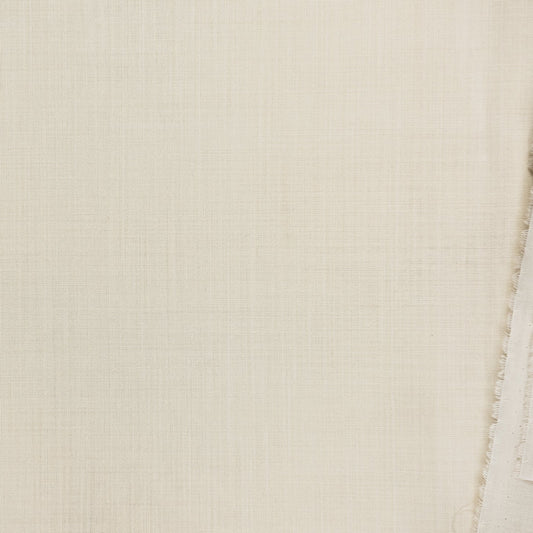
Medium-weight calico
Our C340 medium calico is a practical starting point for many stable woven toiles.
Its natural colour makes fitting marks easy to see. Compare its handle with your final fabric before choosing it for a particularly soft or structured design.
Lightweight cotton
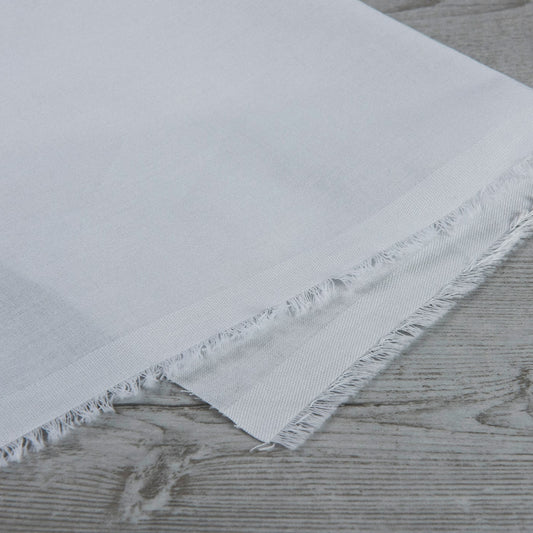
Our MS1 lightweight cotton is worth comparing for projects where medium calico feels too substantial. It may be useful for lighter woven garments and early fitting work.
Lightweight does not automatically mean fluid, though. Check its drape against the cloth you intend to use.
Heavy calico
Our 987 heavy calico is worth sampling when your toile needs more body than a lighter cotton provides.
It won’t necessarily reproduce the thickness, drape or pressing behaviour of a coating or tailoring fabric. Use it according to what you need to test.
You can explore these alongside other options in our Fashion & Toiling collection.
Is muslin the same as toile fabric?
In American sewing terminology, “a muslin” often means a test garment—the equivalent of a toile.
That doesn’t mean every fabric sold as muslin is suitable for every toile. Cloth names vary between suppliers, so check the actual weave, weight and handle rather than choosing by name alone.
Choosing fabric for a bridal toile
Bridal designs can combine several different fabric behaviours in one garment.
A stable cotton may help establish the fit of a bodice, while a flowing skirt needs a closer drape match. For a supported bodice, include the layers or boning that materially affect its shape.
The weight of a skirt can also affect how the bodice sits. Before finalising the fit, test the relevant parts together rather than relying entirely on a separate bodice fitting.
There isn’t one “bridal toile fabric” that suits every design.
Should you pre-wash toile fabric?
Consider how both the toile and finished garment will be used.
If you intend to wash the toile, prepare the cloth before cutting. If it will only be used for fittings, washing may not be necessary—but remember that washing can change the handle as well as the dimensions.
Prepare the final fabric according to its own care guidance before cutting. Read our fabric shrinkage guide for testing and allowances.
How much fabric do you need?
Start with the pattern’s requirement for your chosen size and fabric width. If you’re testing only part of the garment, plan a layout for those pieces.
Allow extra where you expect significant alterations or want to recut a section. Don’t omit elements that influence the fit you’re checking, such as sleeves, closures or support layers.
Before you order
Compare weight, drape, structure and stretch with your final fabric. Choose a light, plain colour where possible so you can see fitting lines and mark alterations clearly.
Order samples to compare the cloth in the hand. For drape or construction tests, use a larger piece before committing to the full toile.
For questions about the weight, width or finish of our fabrics, email hello@wolfintextiles.co.uk.