Cotton Drill Explained: Uses, Weights and How to Choose
Share
Cotton drill is a twill-woven cloth with a recognisable diagonal texture. It’s used for clothing, workwear, bags, costumes and furnishings, but different drills can feel and perform quite differently.
Choosing the right one means looking at its weight, handle and finish alongside what you’re making. Here’s what to check, with a comparison of the four cotton drills we stock at Wolfin.
What is cotton drill?
Drill’s diagonal texture comes from its twill weave. Compared with a plain-weave cotton such as calico, it has a different surface and often a more substantial feel.
Drill is available in different weights, colours and finishes. Some are flexible enough for clothing; others have more body for structured pieces. The name alone won’t tell you how stiff, soft or heavy a particular cloth will be.
What is cotton drill used for?
Clothing, workwear and costumes
Drill is often used for trousers, jackets, uniforms and aprons. Choose the weight and handle to suit the garment: a cloth that works for a structured jacket may feel too heavy for a shirt.
For costumes, consider movement, comfort and how the piece will be cleaned, as well as its appearance. Test the fabric with any interfacing or lining you intend to use.
Bags and accessories
Drill can be useful for tote bags, tool rolls and other sewn accessories. A heavier cloth can add body, although the finished structure also depends on the pattern, lining and reinforcement.
Check how your machine handles several layers, particularly at folded straps, corners and seams.
Cushions and furnishings
Some drills are suitable for cushions, blinds and other furnishing projects. Check the cloth’s finish, cleaning instructions and intended use before choosing.
For upholstery, distinguish between internal construction cloth and the visible covering. Weight alone doesn’t establish suitability for a frequently used seat; abrasion performance and any required fire specification also matter.
How to choose cotton drill
Weight
Fabric weight is usually given in grams per square metre, or gsm. It helps you compare how heavy fabrics are, but doesn’t tell you everything about their stiffness, drape or durability.
A lighter drill may be preferable where flexibility matters. A heavier drill may suit pieces that need more body. Always consider the handle alongside the number.
Handle and drape
Does the fabric bend easily, hold a fold or feel quite firm? These differences matter when choosing between a garment, a bag and a furnishing project.
A sample is useful for comparing texture and body. For a garment or a project involving thick seams, a larger test piece can help you assess drape and sewing performance.
Width
Check the usable width against your cutting layout. Wider cloth may let you fit more pieces across it or avoid a join, but only if the grain direction and layout allow it.
Finish and care
Check whether the drill is supplied loom state, scoured or with a shrunk finish.
Scouring cleans the cloth during processing; it doesn’t automatically mean the fabric is pre-shrunk. A shrunk finish reduces potential shrinkage, but further changes may still occur during washing.
If the finished piece will be washed, test using the intended care method before cutting.
Wolfin’s cotton drills compared
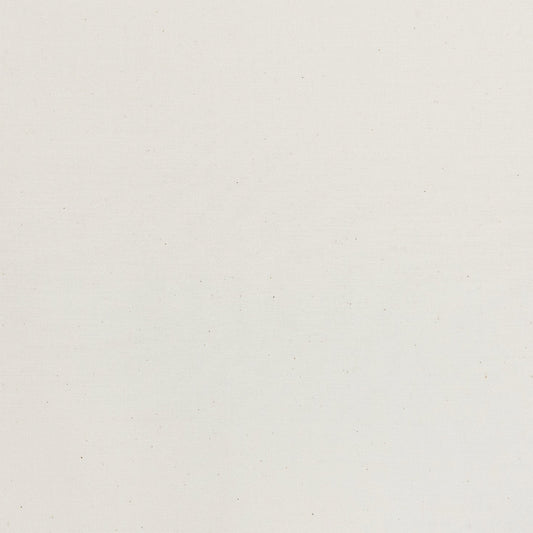
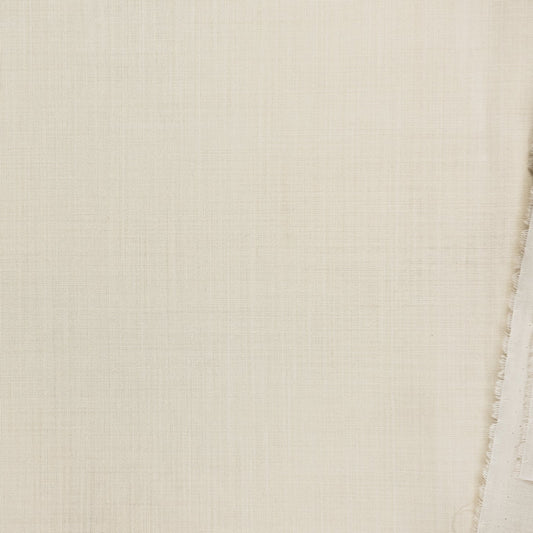
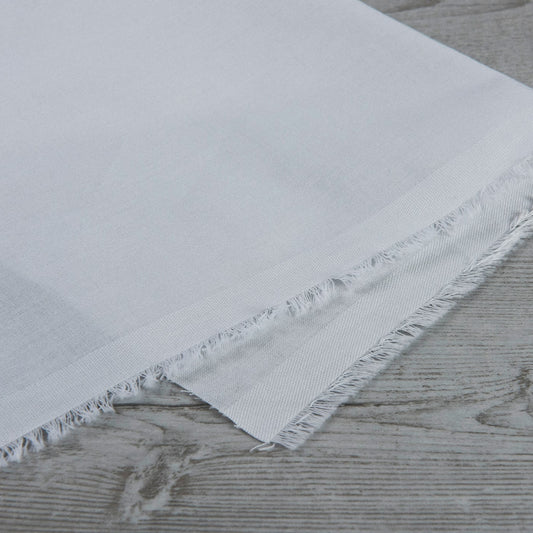
We stock natural, organic natural, black and white cotton drill.
| Cloth | Weight | Width | Composition and finish | Available lengths |
|---|---|---|---|---|
| Natural Cotton Drill | 375gsm | 160cm | 100% cotton, undyed, shrunk finish | By the metre or 25m roll |
| Natural Organic Cotton Drill | 255gsm | 152cm | 100% organic cotton; listed with GOTS and OEKO-TEX Standard 100 certification | By the metre or 50m roll |
| Black Cotton Drill | Listed as heavyweight | 152cm | 100% cotton | By the metre or 50m roll |
| White Cotton Drill | Listed as heavyweight | 152cm | 100% cotton | By the metre or 50m roll |
Check the current product information for availability and care details before ordering.
Natural drill: the heaviest of the two specified weights
At 375gsm and 160cm wide, our natural drill is heavier and wider than the organic option. It’s undyed and supplied with a shrunk finish.
Consider it when you’re looking for a substantial cotton cloth, then check a sample to see whether its handle suits your construction.
Organic natural drill: a lighter alternative
Our organic drill is 255gsm and 152cm wide. It offers a lighter alternative where organic cotton is part of your sourcing requirements.
Choose it for its weight and handle as well as its certification. Organic credentials don’t, by themselves, determine whether a cloth is right for a particular garment or furnishing.
Black and white drill: when colour matters
Both are 152cm wide and described as heavyweight. They provide an alternative when you need a black or white cloth rather than a natural shade.
Compare samples before assuming they feel the same as either natural drill. If you need a precise weight or finish specification, check with us before ordering.
Cotton drill, calico or canvas?
All three can be useful workroom cloths, but they aren’t interchangeable.
| Fabric | What to consider |
|---|---|
| Drill | A diagonal twill weave. Compare weight, flexibility and finish for clothing, accessories or suitable furnishings. |
| Calico | Usually a plain-weave cotton, widely used for toiles and workroom applications. Choose a weight and handle that reflect the job. |
| Canvas | Often a more substantial plain-weave cloth, available in different weights and constructions for applications such as bags, painting surfaces and scenery. |
There is overlap between them. A heavy drill can weigh more than a cloth sold as heavy calico: our natural drill is 375gsm, while our 987 heavy calico is 208gsm.
For a toile, matching the behaviour of your intended final fabric is more useful than simply choosing the strongest or heaviest cloth.
Before you cut
Check the care instructions and prepare the drill according to how the finished piece will be used.
For washable projects, test shrinkage and pre-wash where appropriate. If you plan to dye or print the cloth, test the actual fabric first: its colour and finish will affect the result.
For bags and structured garments, sew a test seam through the number of layers you expect to use.
Our fabric shrinkage guide and fabric quantity guide explain preparation and ordering allowances.
Compare the cloth before ordering
Order samples to compare colour, weave and handle. Samples are 50p each, with up to 5 posted for £1.50.
For questions about a drill’s weight, finish, width or roll length, email hello@wolfintextiles.co.uk.